
Canopies The Chancery Rosewood
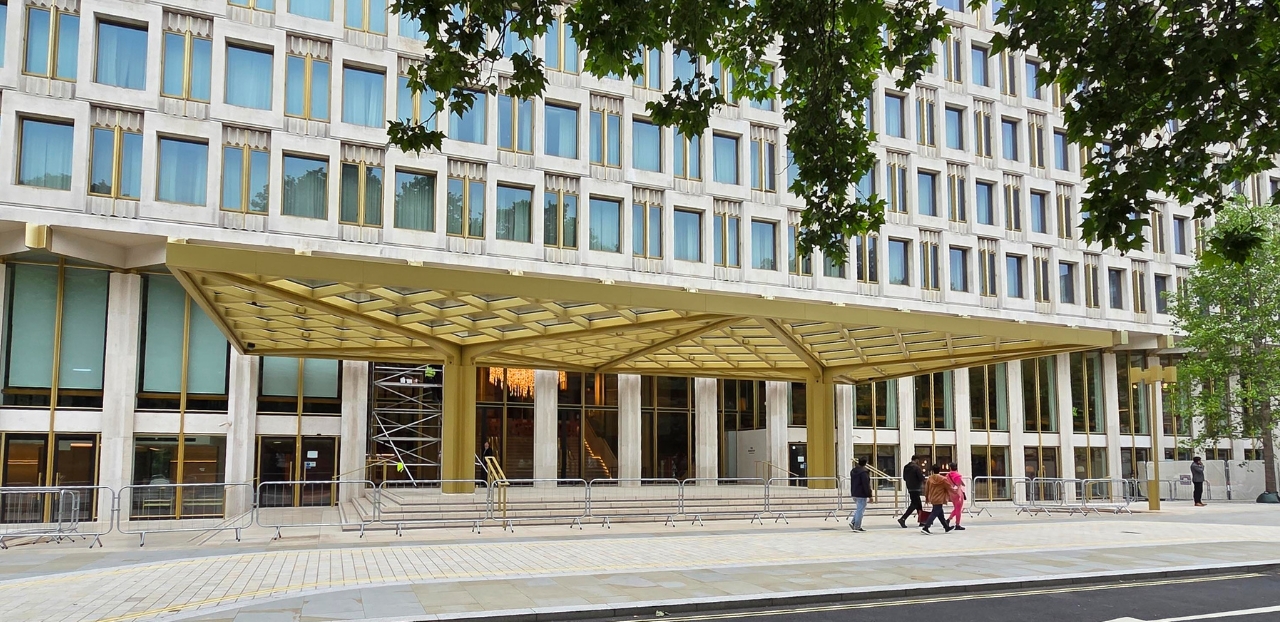
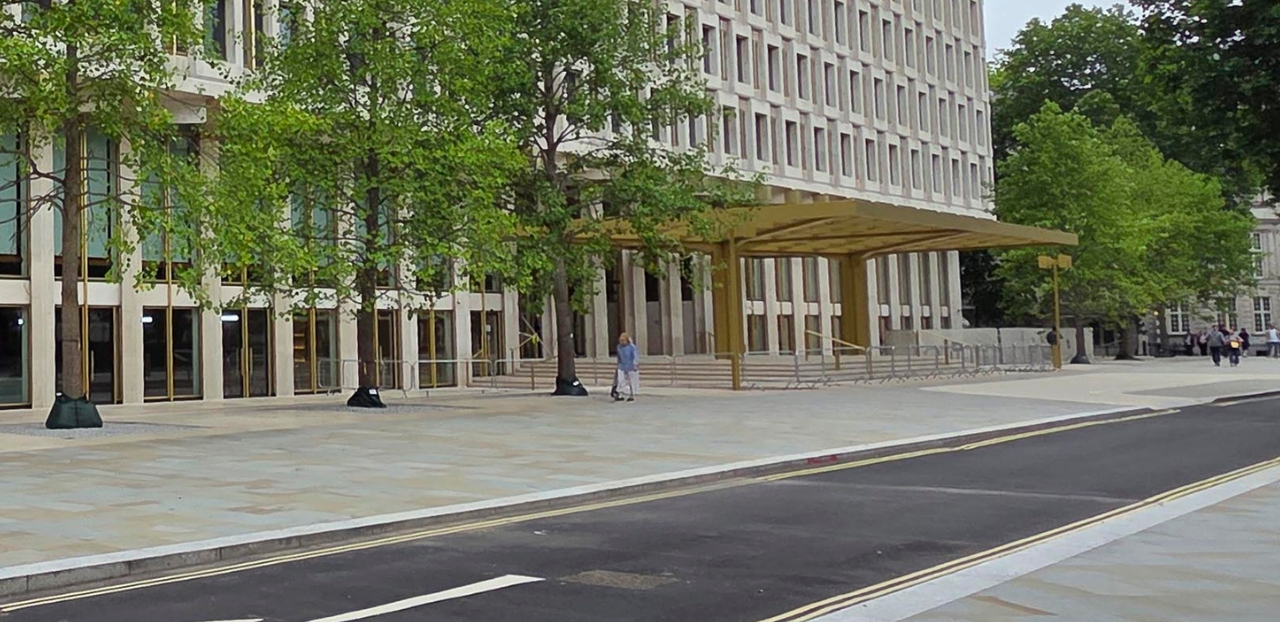
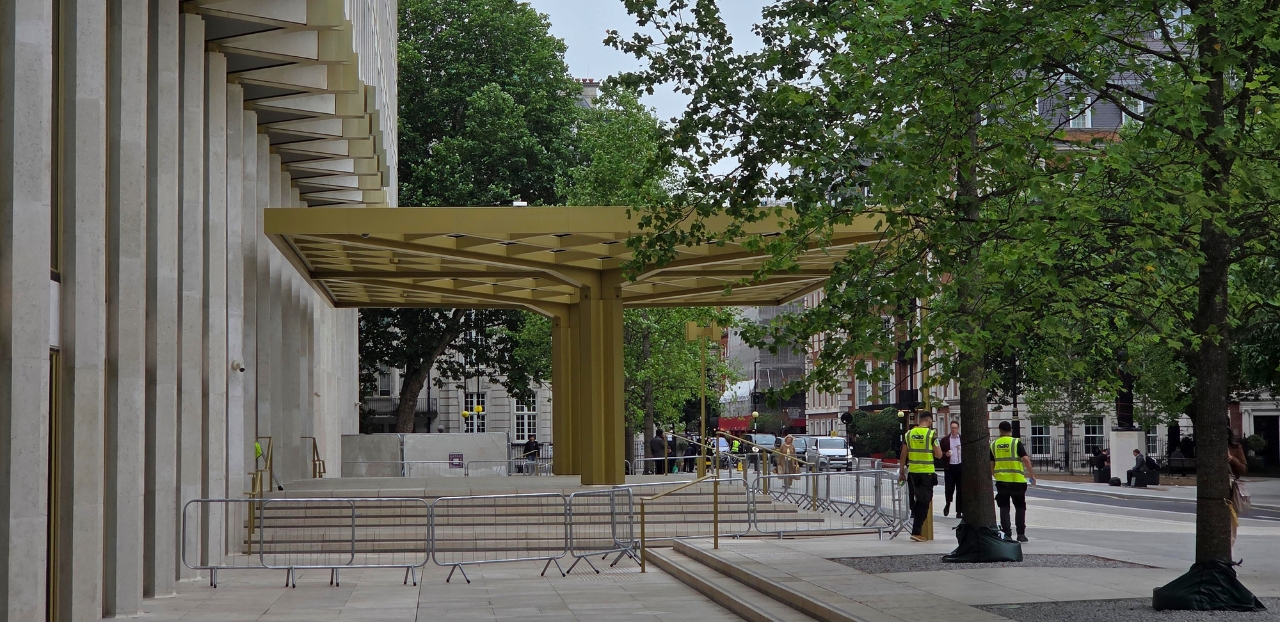
Three golden canopies mark the entrances to The Chancery Rosewood, a luxury hotel located in the carefully renovated former US Embassy building in London, UK. Realised by Octatube, these striking cantilever canopy structures combine engineering innovation with architectural finesse.
Despite their substantial roof areas, each canopy is supported by only one or two columns, creating a light and balanced visual impression. Concealed, custom-made lightning highlights their geometry at night, giving the entrances a warm and welcoming character.
Glass and steel engineering
The main canopy spans an impressive 310 square metres, cantilevering 8.5 metres from only two slender columns. The columns are anchored to the concrete floor by two 1,700-kilogram steel brackets, ensuring stability under various load conditions. The two smaller single-column canopies, each 100 square metres, cantilever 6.5 metres and are built on top of an underground level. All three canopies embody a refined minimalist aesthetic, with a high-quality golden steel finish that complements the hotel’s luxurious character.
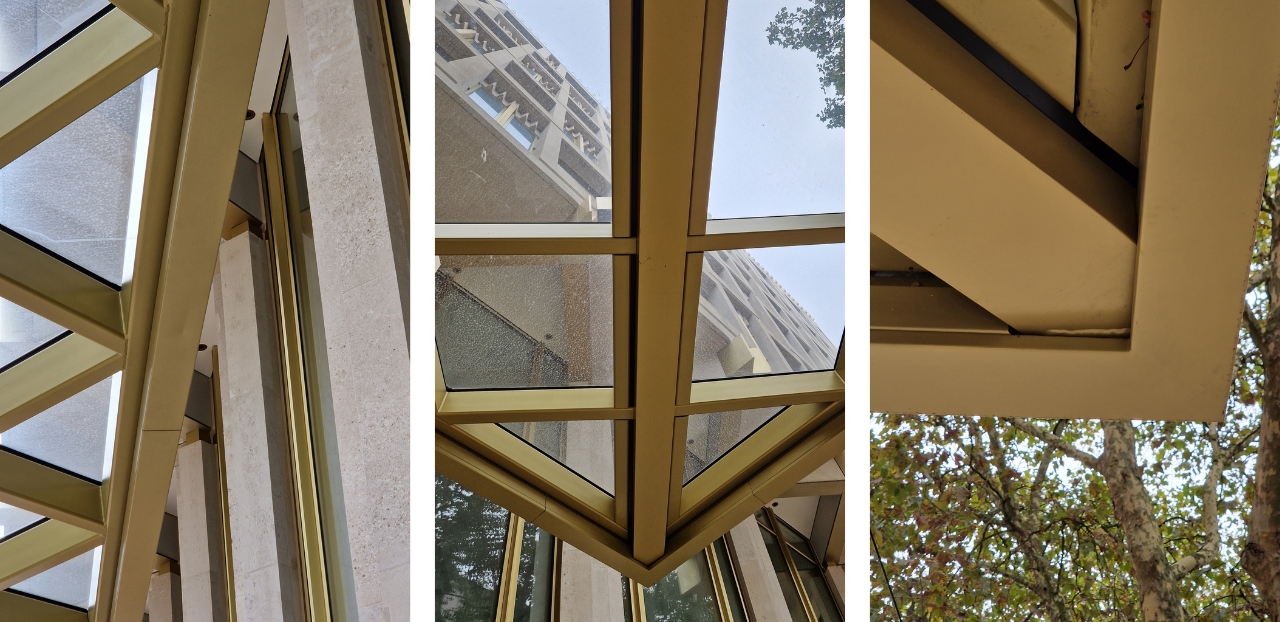
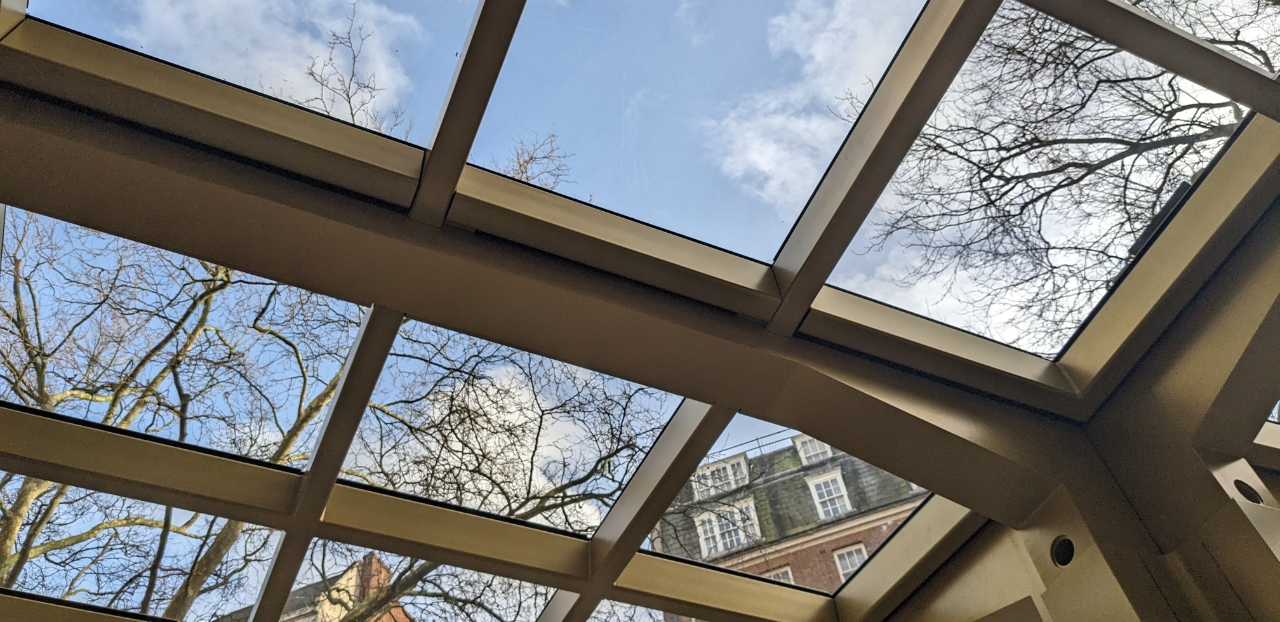
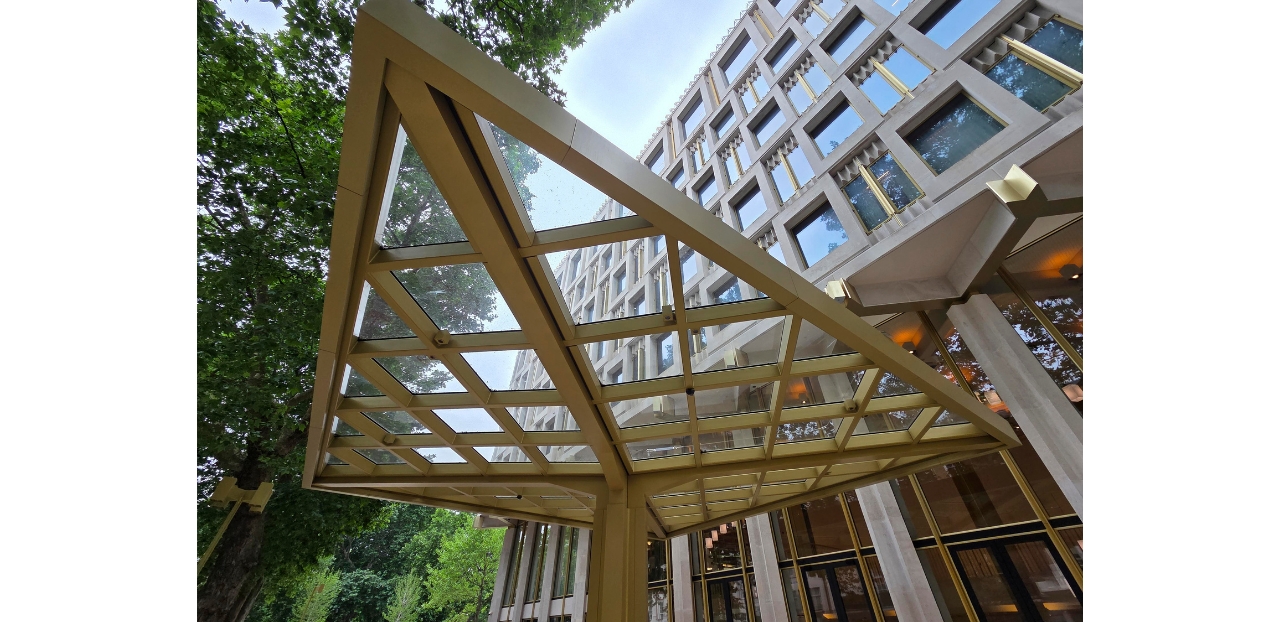
Each canopy is the result of detailed glass and steel engineering, where every joint, connection and finish was refined through close collaboration between designers, engineers and fabricators. The balance between aesthetic restraint and technical performance defines the quality of the final construction.
Homage to Eero Saarinen
The canopies design is directly inspired by Eero Saarinen, the architect of the original 1960 US Embassy building. Saarinen’s modernist approach continued in the renovation. David Chipperfield Architect, responsible for the transformation of the Grade II listed building into The Chancery Rosewood, respected Saarinen’s concept while adapting it for contemporary use. The canopies echo the geometry of the façade and the grid pattern that defines the canopy structure reflects the interior of the hotel, visible in the exposed beams on the ground floor. This creates a seamless connection between old and new.
Custom lighting
Lightning played an important role in the design process. Initial studies explored the possibility of integrating LED lightning into the glazing system to illuminate the laser-etched glass panels. Our tests showed, however, that as the glass refracts the light into a colour gradient, the results were uneven. As a warm white lightning scheme was preferred, the lightning concept shifted form lightning within the glass to lightning the structure itself. Recesses were integrated into the cross beams at the structural nodes, allowing carefully directed light to travel along the canopy’s arms. The result is a balanced distribution of light that accentuates the form without visible fittings.
Testing and prototyping
A mock-up was developed during the design phase to test the connections, finishes, and lightning performance under real conditions. This prototype informed key design decisions, including the choice of materials and coatings.
The result is a family of canopies that appear simple and light, yet rely on refined engineering hidden within their structure. They are an important part of the public realm and guide visitors intuitively towards the entrances of the hotel.